Industry guides
A storm-season marketing checklist for roofers
When hail or wind hits, homeowners search fast and call whoever looks local and trustworthy. Use this checklist before, during and after storm season.
 LeadsGeeks Team3 min read
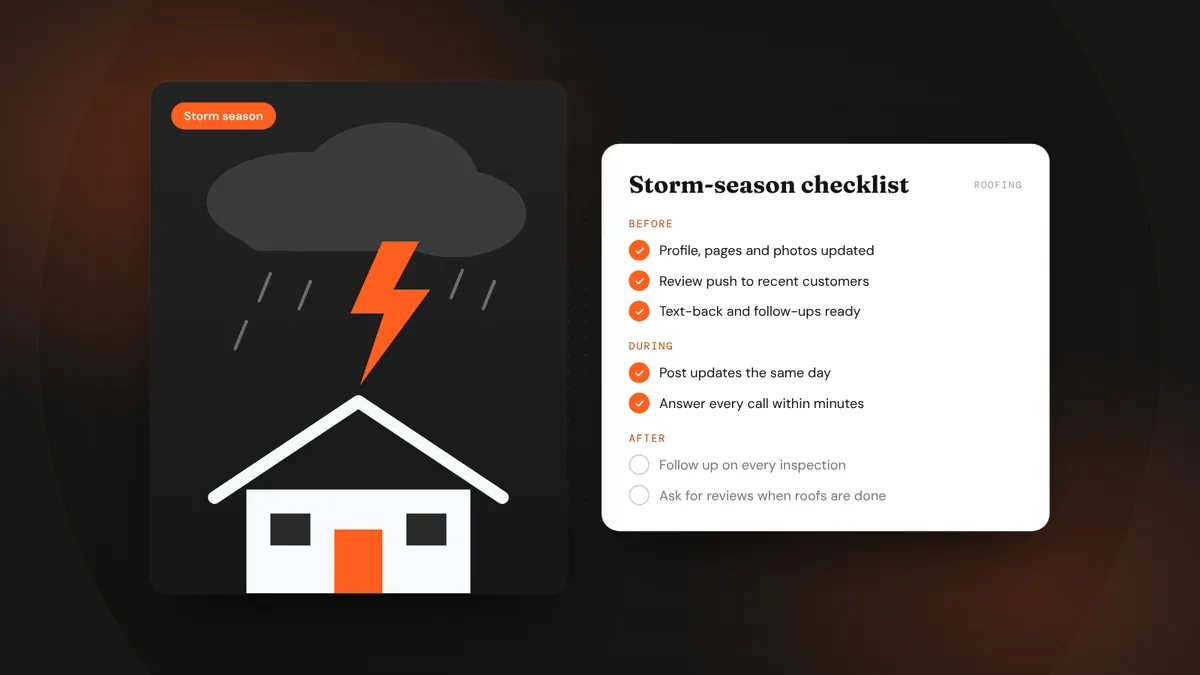
After a storm, phones ring all at once and out-of-town crews flood in. Homeowners are stressed, insurance claims are confusing, and they want a roofer they can trust. The roofers who win storm season are the ones who prepared before the first cloud showed up.
- Before the season: fix your profile, pages, reviews and follow-up so you’re ready for the surge.
- During a storm: post updates, answer every call and lead with trust, not pressure.
- After: follow up on every inspection and claim, and ask for reviews when the job is done.
Before the season
- Tighten your Google Business Profile.Correct hours, service areas, “Roofing contractor” as the primary category, storm damage and insurance claim help listed as services, and recent photos of real local jobs.
- Build storm-damage pages.Pages for hail damage, wind damage and insurance claims, written for homeowners in your area: what to look for, what to do first, how the claim process works with you.
- Stock up on reviews.Ask every recent customer now. Reviews that mention storm repairs and insurance help are gold when the rush starts.
- Set up missed-call text-back and after-hours replies.Storm days bring more calls than any team can answer. An instant text keeps those homeowners from calling the next roofer.
- Prepare your follow-up sequences.Write the texts and emails for after an inspection and while a claim is pending, so they run automatically when you’re busiest.
- Line up ad budget and landing pages.If you run Google Ads or Local Services Ads, have storm campaigns and a dedicated landing page ready to switch on.
When a storm hits
- Post on your Google profile and social pages the same day: you’re local, you’re booking inspections, here’s how to reach you.
- Answer every call or text within minutes. Speed matters more now than any other time.
- Lead with trust. Mention your local address, license, insurance and years in the area. Homeowners are wary of storm chasers.
- Raise ad budgets carefully, focused on the ZIP codes actually hit.
- Document everything. Photos from every inspection help the homeowner’s claim and become proof on your site later.
After the rush
- Follow up on every inspection.Many homeowners get three inspections and decide slowly. A friendly check-in after 2, 5 and 10 days keeps you in the running.
- Stay in touch through the claim.Short updates while the insurer decides show you’re organized and keep competitors out.
- Ask for a review when the roof is done.Ask them to mention the storm, the claim help and their town. These reviews win the next storm.
- Add projects to your site.Before-and-after photos and short write-ups on your storm pages and town pages.
- Review what worked.Which channels brought calls, how many inspections became jobs, and where leads slipped through. Fix it before next season.
A simple timeline
- Two months before peak season: profile, pages and review push.
- One month before: follow-up automations, ads and landing pages ready.
- Storm day to two weeks after: updates, fast response, inspections.
- Two to eight weeks after: claim follow-ups, installs, reviews and case studies.
Frequently asked questions
When should roofers start preparing for storm season?
About two months before your area’s peak storm months. That gives time to update your profile, build pages and collect reviews before the rush.
Should I increase my ad budget after a storm?
Often, yes, but target only the ZIP codes that were hit and make sure you can actually handle the extra calls. Ads that bring calls you can’t answer waste money.
How do I stand out from storm chasers?
Lead with local proof: your address, license, insurance, years in the area and reviews from neighbors. Be calm and clear about the claims process instead of pushy.
LeadsGeeks TeamWe build search, review and follow-up systems for local service businesses: the pages, profiles and automations that turn searches into booked jobs. Industry guidesAn HVAC marketing calendar for every season
 Industry guidesA spring marketing plan for lawn care and landscaping companies
 AI searchWhat AI search readiness means for a local service business