AI search
What AI search readiness means for a local service business
AI assistants are starting to recommend local businesses directly. Here’s what they look for, and the practical steps to make sure your business makes sense to them.
 LeadsGeeks Team4 min read
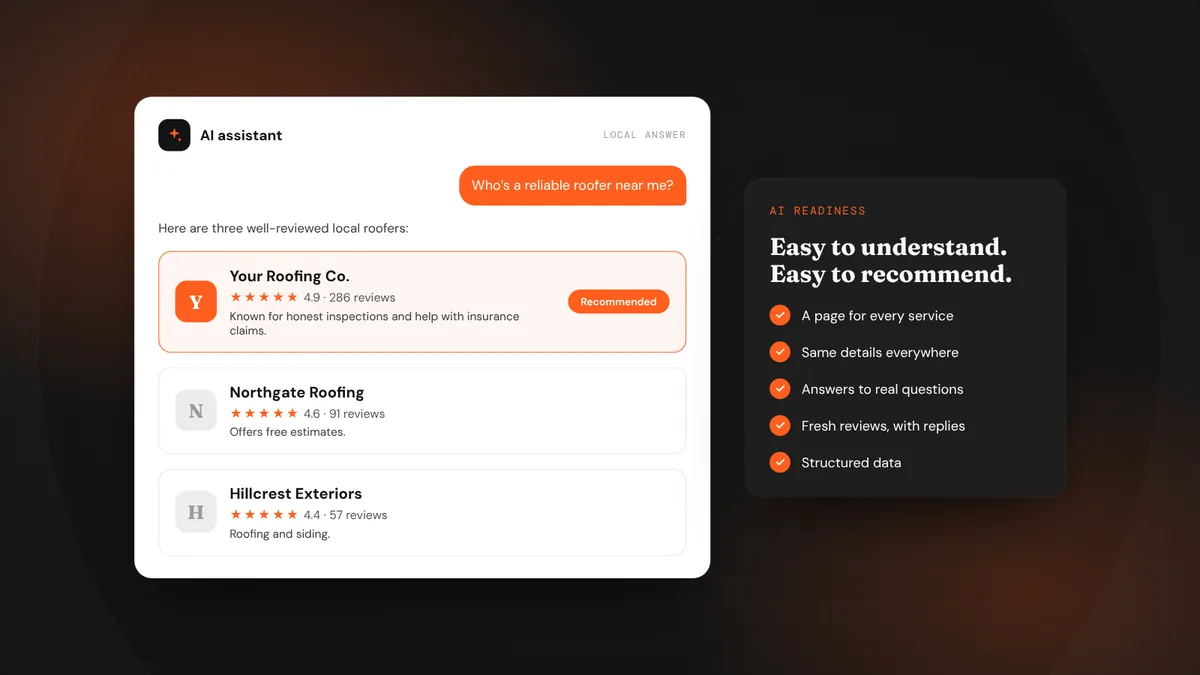
When someone asks an AI assistant for “a reliable roofer near me,” the answer isn’t a page of ten blue links. It’s a short list, and sometimes a single name. AI search readiness is the work of making sure your business is one the assistant understands, trusts and is willing to recommend.
- AI assistants lean on the same signals as Google, but reward clarity and consistency even more.
- Your services, service area, details and reviews need to say the same thing everywhere.
- Five steps get most businesses ready: service pages, matching details, real answers, steady reviews and structured data.
What AI assistants look for
ChatGPT, Google’s AI Overviews, Gemini, Perplexity and the assistants built into phones and cars all have to answer the same question: which local business is a safe recommendation? They draw on many of the signals search engines have always used, but they lean harder on clarity and consistency. If your services, service area and reputation are easy to confirm across your website, your Google Business Profile and the wider web, you’re easier to recommend.
Notice what’s missing from that list: clever keywords, long blog posts written for robots, and tricks. Assistants summarize what the web already says about you. The job is to make sure what it says is accurate, specific and backed up in more than one place.
Why it matters for local service businesses
Local searches are high-intent. Someone looking for a plumber or a tow truck usually needs one today. When an assistant names a business, that recommendation can land the call before the customer ever compares options. That makes being understood just as important as being found.
It also changes who you’re competing with. On a map, you compete with everyone nearby. In an AI answer, you compete for one of two or three spots, and the businesses that get named are usually the ones with the clearest, most consistent story.
Visibility is not a campaign. It is a connected practice.
Five practical steps
- Give every service its own page.One clear page per service and service area beats one long list. It tells people and assistants exactly what you do and where. A page called “Water heater replacement in Plano” answers a question; a page called “Services” doesn’t.
- Make your details identical everywhere.Check your website, Google Business Profile, Yelp, Facebook, Apple Maps, Bing Places and the major directories. Small differences in your name, phone number or address create doubt, and doubt keeps you out of short lists.
- Answer the questions customers ask.Turn the questions you hear on calls into short FAQ answers on your site: how fast you can come out, what a typical job costs, whether you offer financing, which brands you service. Assistants quote plain answers.
- Keep reviews coming, and reply.A steady stream of recent reviews that mention your services and towns, with thoughtful replies, is one of the strongest trust signals you can build. Ten reviews this quarter beat fifty from three years ago.
- Add structured data.Schema markup (LocalBusiness, Service, FAQPage) helps machines read the basics, like services, hours and area served, without guessing. It’s a one-time setup your web developer can add in an afternoon.
Where to start
Start with an honest look at how you show up today. Search your main services and towns, check your profile for gaps, and ask two or three assistants who they recommend for your trade in your area. Note who they name and why they say they chose them. The difference between what you see and what you want customers to see is your to-do list.
AI search readiness isn’t a separate project. It’s the same connected work (clear pages, accurate listings, steady reviews and fast follow-up) done consistently enough that both people and machines can trust it.
Frequently asked questions
Do I need a separate strategy for AI search?
Mostly no. The same work that helps you rank on Google and in the map pack (clear service pages, accurate listings, steady reviews) is what AI assistants rely on. The difference is that consistency and plain answers matter even more.
Can I pay to be recommended by ChatGPT or Gemini?
Not in the organic answers. Some platforms are testing ads, but the recommendations in normal answers come from what the assistant can find and trust about your business online.
How long does it take to show up in AI answers?
It varies by assistant and by how much your business information changes. Fixing inconsistencies and adding clear pages can show results within a few weeks to a few months. Check monthly by asking the same questions.
LeadsGeeks TeamWe build search, review and follow-up systems for local service businesses: the pages, profiles and automations that turn searches into booked jobs. AI searchHow AI assistants decide which local businesses to recommend
 AI searchHow to write FAQ answers AI assistants can quote
 Local SEOHow to win the Google map pack in your service area