Local SEO
Local listings: get your business details right everywhere
Your name, address, phone and hours appear on dozens of sites you never set up. When they don’t match, you lose trust with customers, Google and AI assistants.
 LeadsGeeks Team3 min read
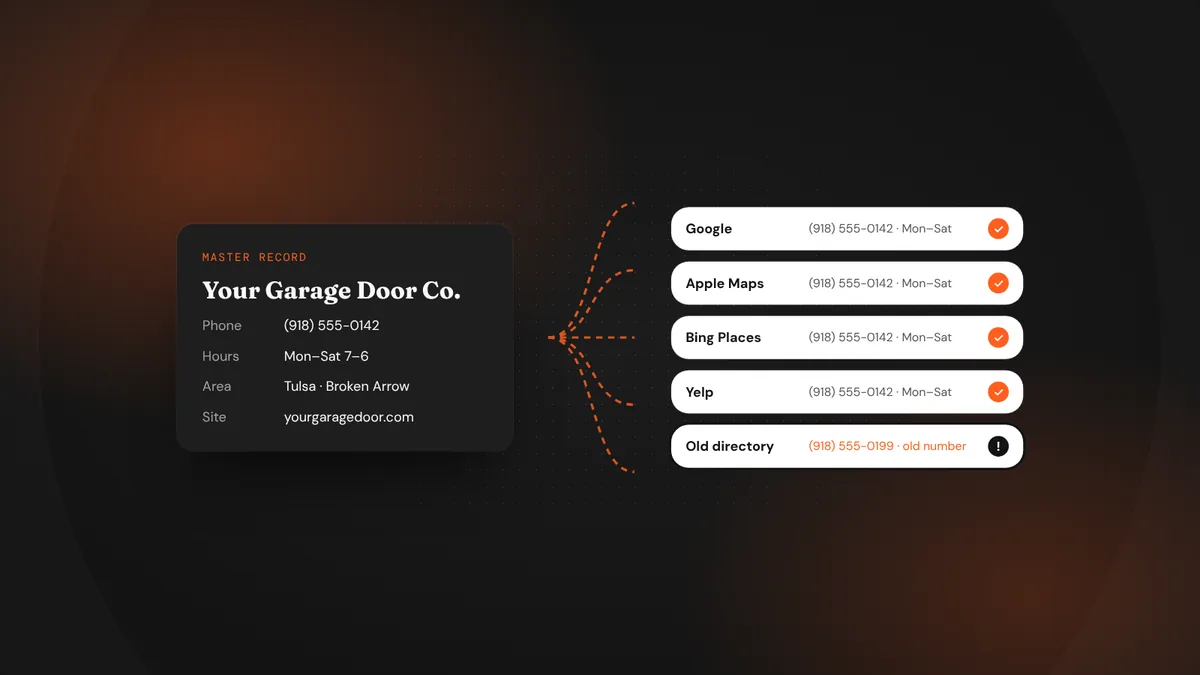
Every place your business is listed online, from Apple Maps to Yelp to a small industry directory, is called a citation. Customers use them to find your number. Google and AI assistants use them to check that you are who you say you are. When they disagree with each other, everyone hesitates.
- Decide on one exact version of your name, address, phone, website and hours.
- Fix the big platforms first, then the directories that matter in your trade.
- Check again whenever something changes: a new number, a move or new hours.
Why matching details matter
Google says prominence, how well known and trusted a business is, is one of the main factors in local results. Consistent listings across the web are part of that picture. They also matter to AI assistants, which pull details from many sources and are more cautious about recommending a business when those sources conflict.
And it matters to customers in the simplest way: an old phone number on a directory is a call you never get.
Step one: write your master record
Before you touch a single listing, write down the exact details you’ll use everywhere. Small differences count, so pick one version and stick to it.
Business name: [exactly as on your signage, no extra keywords] Address: [street, suite, city, state, ZIP] or “service-area business” if you hide it Phone: [one main local number] Website: [https://www.yourdomain.com] Hours: [Mon–Fri 7am–6pm, Sat 8am–2pm] Categories: [primary] + [up to three secondary] Short description: [two sentences: what you do and where]
Step two: fix listings in this order
- Google Business Profile.The listing most customers see first. Match it to your master record exactly.
- Apple Business Connect and Bing Places.They power Apple Maps, Siri and Bing-based answers, including some AI assistants.
- Yelp, Facebook, Nextdoor and the BBB.High-traffic sites that customers and search engines both read.
- Your trade’s directories.Angi, HomeAdvisor, Houzz, Thumbtack, or the associations and manufacturer “find a dealer” pages in your industry.
- The data aggregators.Services such as Data Axle and Foursquare feed many smaller sites. Correcting them fixes listings you didn’t know existed.
Common problems to look for
Listing cleanup isn’t exciting work, but it’s foundational. Once your details match everywhere, everything else you do (reviews, pages, ads) works on top of a story that machines and people can trust.
Frequently asked questions
How many listings does my business need?
Quality beats quantity. The major platforms plus the directories that matter in your trade and town cover most of the value. Hundreds of low-quality directories add little.
Should I use a tracking number on my listings?
Use your main number as the primary phone, especially on Google. If you track calls, add the tracking number as an additional number where the platform allows it.
What if I can’t log in to an old listing?
Most platforms let you claim a listing by verifying ownership by phone, email or postcard. If you can’t, report the wrong details and ask for a correction.
LeadsGeeks TeamWe build search, review and follow-up systems for local service businesses: the pages, profiles and automations that turn searches into booked jobs. Local SEOHow to win the Google map pack in your service area
 Local SEOService-area pages that rank, without reading like spam
 AI searchWhat AI search readiness means for a local service business